

Wednesday, February 26, 2014
OH, NO HE DIDN'T!


Thursday, February 20, 2014
Mandela's Hero
 Have you ever wondered who is a hero to a hero? Nelson Mandela was a man admired, respected,
and a hero to many. He marveled at an
eleven year old South African boy, Nkosi Johnson, and referred to him as an
“icon of the struggle for life.” They
both are heroes in my book.
Have you ever wondered who is a hero to a hero? Nelson Mandela was a man admired, respected,
and a hero to many. He marveled at an
eleven year old South African boy, Nkosi Johnson, and referred to him as an
“icon of the struggle for life.” They
both are heroes in my book.
Mandela joined Nkosi’s war against HIV/AIDS after his son,
Makgatho Mandela, died of AIDS in 2005 just four years after the death of Nkosi
at the age of twelve. Mandela had no
idea when he heard little Nkosi Johnson keynote speech at the 13th
International AIDS Conference at Durban, South Africa, in 2000 that his world
would be touched by the dreaded disease.
He founded the Nelson Mandela Foundation for AIDS research and the Nelson Mandela
Children’s Fund to assist children orphaned by AIDS. Nkosi's Haven founded in 1999 provides care for HIV/AIDS infected mothers, their children, and AIDS orphans.
Nkosi is listed with
Nelson Mandela among SABC3’s Greatest South Africans. He was honored by the KidsRights Foundation
as one of 7 Children Who Changed the World.
Gail Johnson, his white South African adoptive mother, accepted the
International Children’s Peace Prize from Mikhail Gorbachev posthumously on
behalf of her son in 2005.
Thursday, August 22, 2013
PIGS GET A BAD RAP
I like pigs. Dogs
look up to us. Cats look down on
us. Pigs treat us as equals.
Pigs are extremely intelligent animals. In the animal kingdom, pigs rank No. 4 in intelligence behind chimpanzees, dolphins, and elephants. They quickly master the Mirror Self-Recognition Test, an indicator of self-awareness and advanced intelligence in animals. Experts consider pigs more trainable than dogs or cats. It’s not uncommon to see pigs in circus acts now.
Whether you want to admit it or not, we humans have a lot in
common with pigs. The anatomy of a pig
and a human are very similar. That’s why
pig heart valves are used in human hearts.
They’ve been available for more than 30 years. Just think of the number of lives that have
been saved by the use of pig heart valves.
There is a worldwide shortage of organs for transplants. Scientists are researching genetically
engineered pig organs for human transplants in the future. Pig hearts, lungs, livers, gall bladders,
and the digestive system are very similar to that of humans, only smaller. You’d think that apes and chimpanzees would
be more like us than pigs, but not so.
Pigs don’t have sweat glands so because they roll in
and spend a lot of time in mud to cool off in hot weather, they’re called dirty
and lazy. Pigs are Number 4 in animal
intelligence behind chimpanzees, dolphins, and elephants. And a pig’s anatomy is similar to yours and
mine. Remember all of that the next time
you hear a pig slandered. Did I set the
record straight?
Monday, February 18, 2013
ARE THERE DOGS IN HEAVEN?
If there are no dogs in heaven, then when I die
I want to go where they went.
Will Rogers
Proof of Heaven written by renowned neurosurgeon Dr. Eben Alexander answers the question in his fascinating book. A New York Times Best Seller, it tells of Dr. Alexander’s miraculous recovery after a diagnosis of bacterial meningitis. His physicians gave him a 10% chance of recovery and living in a vegetative state if he managed to survive. Dr. Alexander writes of a near death experience (NDE) in extraordinary detail.
One thing that he wrote in his description of flying over a brilliant heavenly landscape took my breath away. He wrote about seeing a dog running and jumping among people and like the people, it was full of joy.
In my book Life with McDuff: Lessons Learned from a Therapy Dog, I write about an incident after the death of my Scottish terrier therapy dog that I was hesitant to include. I held McDuff in my arms and watched the life ebb out of his eyes on Halloween morning, 2003. He returned to me a few months after I put him down to shake me out of my prolonged and overwhelming grief as I cried for him in the mid-night hours.
Therapy dogs and their owners are extremely close, but there was more between us. McDuff was a Spirit Dog, and we shared an unusual bond. Many time I witnessed his uncanny effect on people and other animals during our nine years together.
One thing I know without a doubt. McDuff’s spirit went somewhere and it came back from somewhere. It doesn't concern me whether whether anyone else shares my belief. There is life after death — even for our beloved pets.
Here is my poem, "Never Again," from Life with McDuff:
Never again will I see those wise mystical eyes,
Eyes I loved so well burn into mine,
Eyes that created joy and comfort, healing and calmness
Amusement and laughter, and tears of frustration;
Never again will I witness your tender tongue convey
Love and unconditional acceptance,
The tongue that brought smiles
To the face of the sick and disabled;
Never again will you be there to lick the tears away from my face,
If ever life beats me down to the ground;
Never again will I feel the comfort and protection of your furry back
Against my leg as we lie sleeping in bed;
Forever more will I hold in my heart the life lessons you taught,
How to forgive, love unconditionally,
Look beyond outer appearances,
Enjoy life instead of fighting and resisting it,
And to help myself by being of service to others;
Farewell, my teacher, my friend, my companion
The joy and blessing of having you in my life
Far outweighed the pain of losing you;
Farewell my McDuff,
Until we meet again, and I gaze into those eyes once more.
I want to go where they went.
Will Rogers
Proof of Heaven written by renowned neurosurgeon Dr. Eben Alexander answers the question in his fascinating book. A New York Times Best Seller, it tells of Dr. Alexander’s miraculous recovery after a diagnosis of bacterial meningitis. His physicians gave him a 10% chance of recovery and living in a vegetative state if he managed to survive. Dr. Alexander writes of a near death experience (NDE) in extraordinary detail.
One thing that he wrote in his description of flying over a brilliant heavenly landscape took my breath away. He wrote about seeing a dog running and jumping among people and like the people, it was full of joy.
In my book Life with McDuff: Lessons Learned from a Therapy Dog, I write about an incident after the death of my Scottish terrier therapy dog that I was hesitant to include. I held McDuff in my arms and watched the life ebb out of his eyes on Halloween morning, 2003. He returned to me a few months after I put him down to shake me out of my prolonged and overwhelming grief as I cried for him in the mid-night hours.
Therapy dogs and their owners are extremely close, but there was more between us. McDuff was a Spirit Dog, and we shared an unusual bond. Many time I witnessed his uncanny effect on people and other animals during our nine years together.
One thing I know without a doubt. McDuff’s spirit went somewhere and it came back from somewhere. It doesn't concern me whether whether anyone else shares my belief. There is life after death — even for our beloved pets.
Here is my poem, "Never Again," from Life with McDuff:
Never again will I see those wise mystical eyes,
Eyes I loved so well burn into mine,
Eyes that created joy and comfort, healing and calmness
Amusement and laughter, and tears of frustration;
Never again will I witness your tender tongue convey
Love and unconditional acceptance,
The tongue that brought smiles
To the face of the sick and disabled;
Never again will you be there to lick the tears away from my face,
If ever life beats me down to the ground;
Never again will I feel the comfort and protection of your furry back
Against my leg as we lie sleeping in bed;
Forever more will I hold in my heart the life lessons you taught,
How to forgive, love unconditionally,
Look beyond outer appearances,
Enjoy life instead of fighting and resisting it,
And to help myself by being of service to others;
Farewell, my teacher, my friend, my companion
The joy and blessing of having you in my life
Far outweighed the pain of losing you;
Farewell my McDuff,
Until we meet again, and I gaze into those eyes once more.
Wednesday, January 23, 2013
College Students Are Going to the Dogs
Colleges all across the America are going to the
dogs. Tufts, UNC, Oberlin, Harvard and
Yale are just a few institutions of higher learning where students have
discovered that therapy dogs can relieve the stress and strain of college
life. After trying massage, yoga, pizza
parties, and other activities we won’t mention to reduce pressure, they hit the
jackpot with furry, four-legged stress relievers.
The calming and therapeutic effect of therapy dogs is no secret. They visit hospitals, nursing homes, assisted living facilities, schools, and libraries. Therapy dogs have been called upon after crisis situations like 911, Hurricanes Katrina and Sandy, and recently after the tragedy at Sandy Hook School at Newtown, Connecticut.
A chapter in my book, Life with McDuff: LessonsLearned from a Therapy Dog, tells how I became a therapy dog volunteer. If you own a dog who likes people and other animals, loves to be petted, and has basic obedience training, why not consider becoming a therapy dog volunteer? See my web site for links containing information about Therapy Dogs International, Therapy Dogs, Inc., Reading with Rover, and AKC Canine Good Citizen Test.
Pass the word! Today’s college students are going to the dogs.
Friday, January 4, 2013
DOGS JUST KNOW!
The dog in this video interacting with a Down’s syndrome baby just knows. She knows how to offer love and acceptance. She knows that this baby is special. Even though not a trained therapy dog, she just knows. How many times have you sat mired deep in despair because of some real or imagined problem and a furry head comes to rest on your knee, eyes borrowing deep into yours, and a tail furiously wagging “it’s going to be alright?” Or, what happens when some unbelievably good fortune comes your way. You shout and jump for joy, and guess who jumps with you barking and spinning around in excitement? Dogs just know when you are happy, and they know when you are sad. My Scottish terrier therapy dog comforted me many times. He instinctively knew how to reach out and ease me through the storms of our life together. I write about it in my book, Life with McDuff: Lessons Learned from a Therapy Dog. The baby in the video experienced what we dog lovers have witnessed time after time. Dogs just know!
Tuesday, December 18, 2012
Sandy Hook Comfort Dogs

Monday, May 14, 2012
WILL ONION DIE?

Monday, April 9, 2012
Have You Ever Wondered?
Have you ever wondered what plants the desire in someone to want to write a book? I have, and I believe I know the answer. For me it was my background and love of animals, especially dogs.
I’m a coal miner’s daughter raised in a wooden, weather-beaten company house in southwest Pennsylvania. We were all poor in Beeson Works, but everyone helped and supported each other in that tight-knit coal mining community. Diverse nationalities blended together in harmony: Italians, Russians, Greeks, Poles, Swiss, Czechoslovakians, and a few African-American families.
During a coal mine strike, or other bouts of unemployment, neighbors shared food, clothing and words of encouragement. If a mother became seriously ill or disabled, my mother and her neighbors cleaned house, cooked meals and washed clothes for the family without being asked or expecting anything in return. I grew up watching neighbor helping neighbor.
Ever since I can remember I have loved all kinds of animals. I roamed the hills around Beeson Works with an every present dog; assisted my cats when they gave birth; rescued and returned baby birds to their nests; splashed water on the fish my dad caught to keep them alive; and tamed and rode a half wild mine horse bareback. When I became an adult, I found a unique way to combine a desire to help others and my love of animals. I became a Therapy Dogs International volunteer.
I wrote a book about my Scottish terrier therapy dog and the valuable life lessons he taught me on his mission to bring comfort and joy to the disabled, elderly, sick, and school children struggling with reading difficulties. The life lesson he taught that impacted my life the most was being of service to others.
So you see, my background as a coal miner’s daughter and love of animals led me to write a book about my life, experiences as a TDI volunteer, and McDuff. What about you? You have something interesting to share with the world. Pick up your pen or sit down at your computer and let the creative juices flow. You have a story to tell!
I’m a coal miner’s daughter raised in a wooden, weather-beaten company house in southwest Pennsylvania. We were all poor in Beeson Works, but everyone helped and supported each other in that tight-knit coal mining community. Diverse nationalities blended together in harmony: Italians, Russians, Greeks, Poles, Swiss, Czechoslovakians, and a few African-American families.
During a coal mine strike, or other bouts of unemployment, neighbors shared food, clothing and words of encouragement. If a mother became seriously ill or disabled, my mother and her neighbors cleaned house, cooked meals and washed clothes for the family without being asked or expecting anything in return. I grew up watching neighbor helping neighbor.
Ever since I can remember I have loved all kinds of animals. I roamed the hills around Beeson Works with an every present dog; assisted my cats when they gave birth; rescued and returned baby birds to their nests; splashed water on the fish my dad caught to keep them alive; and tamed and rode a half wild mine horse bareback. When I became an adult, I found a unique way to combine a desire to help others and my love of animals. I became a Therapy Dogs International volunteer.
I wrote a book about my Scottish terrier therapy dog and the valuable life lessons he taught me on his mission to bring comfort and joy to the disabled, elderly, sick, and school children struggling with reading difficulties. The life lesson he taught that impacted my life the most was being of service to others.
So you see, my background as a coal miner’s daughter and love of animals led me to write a book about my life, experiences as a TDI volunteer, and McDuff. What about you? You have something interesting to share with the world. Pick up your pen or sit down at your computer and let the creative juices flow. You have a story to tell!
Tuesday, March 20, 2012
McDuff & The Kids
The book I wrote about McDuff did not contain all the stories about him. I could probably write another book because he was so unique. The kids in the neighborhood loved McDuff. I’d hear the doorbell ring in the summer. “Can McDuff come out and play?” one of them would ask when I came to the door. Several others waited in the yard.
I’d let McDuff outside. Someone would retrieve the stick from its designated place, give it to McDuff, and the game would begin. The kids would try to catch him and take the stick away. It never happened. When they became tired, he would slow down, let them almost touch him, and then take off again. They fell on the ground laughing. Big kids, little kids; they all had fun.
Another thing had them ringing my doorbell. I told one of them that McDuff had photo ID. “No way. Dogs can’t get an ID.” I showed him McDuff’s Therapy Dogs International badge with his photo on it. Evidently he told his buddies who didn’t believe him. One by one they came to find out for themselves.
A chapter in Life with McDuff entitled “McDuff Loved Them All” sums it up. He loved everyone and everything. Well, everything except monkeys, birds, and the UPS truck. Cats and ducks were favorites. He loved going to his veterinarians and didn’t want to come home after boarding with them.
I will always miss him and be thankful for the time he was in my life.
I’d let McDuff outside. Someone would retrieve the stick from its designated place, give it to McDuff, and the game would begin. The kids would try to catch him and take the stick away. It never happened. When they became tired, he would slow down, let them almost touch him, and then take off again. They fell on the ground laughing. Big kids, little kids; they all had fun.
Another thing had them ringing my doorbell. I told one of them that McDuff had photo ID. “No way. Dogs can’t get an ID.” I showed him McDuff’s Therapy Dogs International badge with his photo on it. Evidently he told his buddies who didn’t believe him. One by one they came to find out for themselves.
A chapter in Life with McDuff entitled “McDuff Loved Them All” sums it up. He loved everyone and everything. Well, everything except monkeys, birds, and the UPS truck. Cats and ducks were favorites. He loved going to his veterinarians and didn’t want to come home after boarding with them.
I will always miss him and be thankful for the time he was in my life.
Saturday, February 18, 2012
The Westminster Kennel Club Dog Show

My book, Life with McDuff: Lessons Learned from a Therapy Dog, was nominated for a Special Award by the Dog Writers Association of America (DWAA) in 2010. I attended the Awards Banquet in New York City. DWAA is closely associated with the Westminster Kennel Club (WKC) and the annual awards banquet is held on the eve of the Westminster Kennel Club Dog Show. A lady sitting at my table was showing her dog at Madison Square Garden the next day and invited me to sit ringside. What an experience!
Like most dog lovers, I’ve never missed watching the Westminster Kennel Club Dog Show on television down through the years. But, attending in person, sitting ringside no less, was the thrill of a lifetime. I’ve owned pure bred and mixed breeds and loved them the same. But, I must admit that watching the crème de la crème of every registered breed of dog was exhilarating.
Who knew that the huge Mastiffs have a mound of towels stacked up beside them that wiped off their dripping drool before being judged? For the rare “accident” in the show ring, there are employees who reminded me of the ball girl and boys you see at a professional tennis match. Only they aren’t picking up balls. You don’t see that on TV! If at all possible, dog lovers should put the WKC Dog Show on their bucket list.
This year a fluffy, eleven pounds, four-year old Pekingese named Malachy won Best in Show. Sadie, a Scottish terrier like my McDuff, won it in 2010. I once heard a WKC dog show announcer comment as the Scotties pranced into the ring, “The Scottish terrier is the only breed of dog that knows it is smarter than its master.” At the time I didn’t have a clue. After living nine years with a Scottie that combined off-the-chart intelligence with you-won’t-believe stubbornness to outsmart and frustrate me to tears — I get it.
Tuesday, February 14, 2012
Why Can't People Get Along?
Why can’t the human race get along?
Gregory Pike
Gregory Pike is not a famous celebrity, philosopher, politician, or religious leader. In fact, he is a homeless man living on the streets of Santa Barbara, California. In my opinion, he has done more to demonstrate the true meaning of love and acceptance than anyone famous. I hope the world takes notice and the instances of bullying and intolerance of others is dealt a serious blow in the United States and around the world. Click on the link to see what Gregory, his dog, cat, and rat have to say to the world.
Gregory says that he makes everyone happy and in return it makes him happy. That he didn’t do it for money, but to prove a point. What a philosophy! And from a man with so much less than others. We can all learn from him. A human being, dog, cat, and rat coexisting in brotherhood, love, and peace. He says that perhaps they should be sent to Iraq to change things. Gregory asked a question for all of us to consider. “Why can’t people get along?”
Gregory Pike
Gregory Pike is not a famous celebrity, philosopher, politician, or religious leader. In fact, he is a homeless man living on the streets of Santa Barbara, California. In my opinion, he has done more to demonstrate the true meaning of love and acceptance than anyone famous. I hope the world takes notice and the instances of bullying and intolerance of others is dealt a serious blow in the United States and around the world. Click on the link to see what Gregory, his dog, cat, and rat have to say to the world.
Gregory says that he makes everyone happy and in return it makes him happy. That he didn’t do it for money, but to prove a point. What a philosophy! And from a man with so much less than others. We can all learn from him. A human being, dog, cat, and rat coexisting in brotherhood, love, and peace. He says that perhaps they should be sent to Iraq to change things. Gregory asked a question for all of us to consider. “Why can’t people get along?”
Tuesday, January 31, 2012
The Tuskegee Airmen

Never was so much owed by so many to so few.
Winston Churchill
Winston Churchill spoke of the brave English RAF pilots in his wartime speech on August 20, 1940. The same can be said about the Tuskegee Airmen, the courageous Black fighter pilots of the 332nd Fighter Group, 99th Pursuit Squadron, who protected the B-17 bombers on missions over Germany. But, they fought more battles than faced by the RAF fighter pilots. They fought discrimination and bigotry on the home front before, during, and after the World War II. When finally permitted to fly combat in a segregated Air Force in 1944, they epitomized bravery and courage in aerial combat with the Luftwaffe over Germany.
According to Wikipedia, the Tuskegee Airmen are credited with destroying at least 112 airborne enemy aircraft, 150 planes on the ground, over 600 trains, and over 40 barges/boats. Their destruction of a navy destroyer was the first such accomplishment of its time.
Charles Brantley, Earl Lane, and Roscoe Brown in their P-51 Mustangs shot down the first jet planes used in combat on March 2, 1944, over Berlin. On March 24, 1945, the Tuskegee Airmen flew the longest bomber escort mission of WW II. Of the hundreds of mission flown, the Tuskegee Airmen only lost 25 bombers. One hundred fifty Airmen lost their lives in accidents or combat and 32 taken as prisoners of war.
The Tuskegee Airmen received the following awards and decorations: Three Distinguished Unit Citations, one Silver Star, estimated 150 Distinguished Flying Crosses, 14 Bronze Stars, 744 Air Medals and 8 Purple Hearts. The Congressional Gold Medal was presented to the approximately 300 surviving Tuskegee Airmen or their widows at U.S. Capitol rotunda by President George W. Bush on March 29, 2007.
I recently saw the entertaining and realistic George Lucas movie, Red Tails. The name derives from the painted red tail sections of the planes flown by the Tuskegee Airmen. Lucas states that Hollywood refused to support his efforts to make the movie. Just imagine. George Lucas of Star Wars and Indiana Jones fame told by all of the Hollywood studios that a movie made by him about Black pilots wouldn’t find an audience.
After trying for twenty-three years to obtain backing for the movie, Lucas put up millions of his own money. He got the last laugh. Red Tails opened 2nd at the box office and made $19 million the first week. Every American who wants to see a good movie about highly-skilled and courageous fighter pilots should help George Lucas laugh all the way to the bank.
The rallying cry of the Red Tails: "From the last plane, to the last bullet, to the last minute, to the last man, we fight!"
Monday, January 16, 2012
Bureau of Land Management: The Good Guys?

The greatness of a nation can be judged by the way its animals are treated.
Mahatma Gandhi
Although I love dogs and even wrote a book about my Scottish terrier therapy dog, horses have been my passion ever since I can remember. As a coal miner’s daughter growing up in Pennsylvania, I learned to ride by taming a half-wild mine horse and riding him bareback. To this day the desire to own a horse has never wavered.
I live in Nevada now where the wild mustangs roam free. Large herds of horses have inhabited the range in northern Nevada for years. That’s why it struck me as strange that the Bureau of Land Management (BLM) would suddenly take such a huge and all consuming interest in rounding them up. And, not in the most humane way. Helicopters herd them in the extreme heat over rough terrain until the hooves fall off of some, and mares abort their foals. Many horses drop dead from sheer exhaustion.
I realize that the ranchers want to get rid of the horses because they want the land cleared. They have big bucks and lobbyist to help them get their way. Madeleine Pickens, wife of oilman T. Boone Pickens, offered to develop and fund a one-million acre sanctuary for the 31,000 horses rounded up by the BLM. No deal. For some reason, the BLM seemed hell bent to hang on to them.
Now I know the reason! Under the radar while traveling in Asia on November 18th, President Obama signed a bill by autopen containing a provision that paves the way for the slaughtering of horses in the United States. Now I get it. The BLM, politicians, and the rest of the fat cats will make a fortune in the horse slaughterhouse business due to their knowledge through insider trading. If you don’t believe that they all knew what the president was up to, I have a bridge in Brooklyn that I want to sell you.
The Occupy Movement speaks for the 99%. Who speaks for the thousands of horses waiting for butchering at American slaughterhouses now that the ban has been lifted?
Saturday, December 31, 2011
IT'S VEGAS, BABY!

Even though I live in Henderson, Nevada, it’s almost impossible to tell where Las Vegas stops and Henderson begins. In my book about my Scottish terrier therapy dog McDuff, I describe how Scotties are “a breed apart.” The same thing applies to Las Vegas. There is no city like it in the world.
Where else would a friend invite you to a “party,” and you end up attending her surprise wedding? Even her mother didn’t have a clue. No bridesmaids, best man, or other nuptial trimmings. Gourmet cupcakes for everyone replaced the traditional wedding cake. Everything was so exciting, so unforgettable, and so Vegas.
Where else could you attend a variety show at a senior center and see participants ages 65 to 85? Okay, that might not be so unusual. But to see a performer in a nun’s habit announce after taking a long, slow look at the audience, “I’m not a nun, and I’m going to get out of this habit.” She began to strip as “The Stripper” blasted throughout the room. She didn’t have a pole, but made real good use of that chair on the stage. Only in Vegas!
“What happens in Vegas, stays in Vegas” is not true. No matter where life takes me in the future, the memories of beautiful friendships and exciting times I’ve experienced in Las Vegas goes with me.
Monday, December 19, 2011
McDuff's Secret
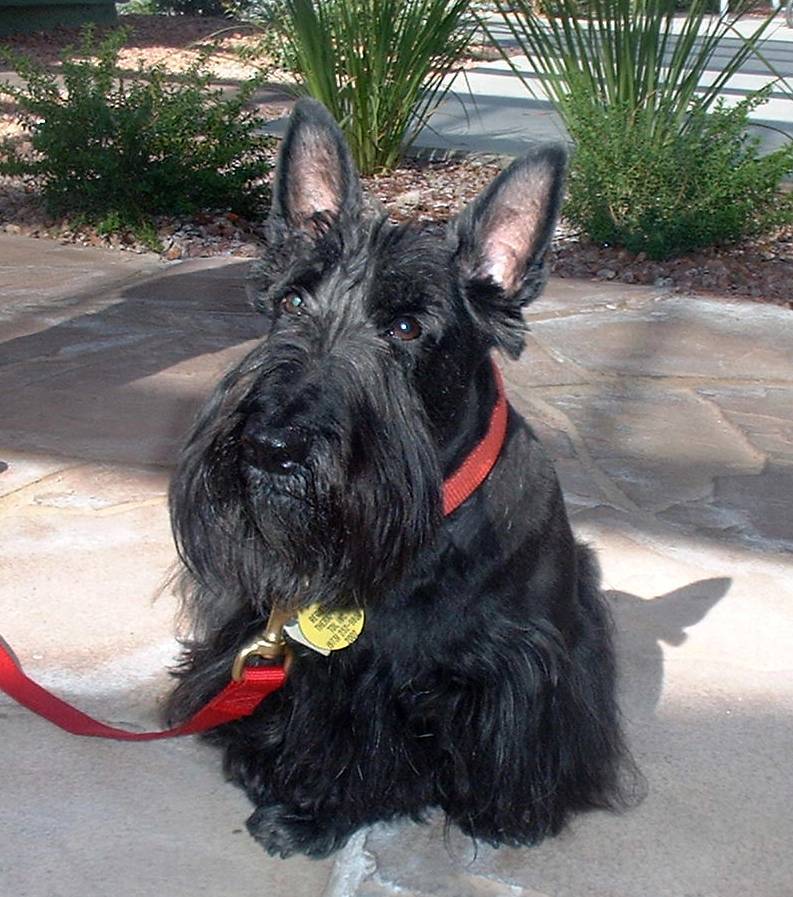
It’s believed that the bond between a therapy dog and its owner is stronger than ordinary. Perhaps that’s because they partner and share in bringing happiness and joy to others. My Scottish terrier therapy dog lived and breathed to bring comfort and smiles to the elderly, sick, and disabled. I witnessed the life and the future of a fifth grader with crippling reading difficulties change because of reading to McDuff in the Reading with Rover Program.
My life was changed most of all because of Spirit Dog McDuff. I wrote a book, Life with McDuff: Lessons Learned from a Therapy Dog, about my nine-year journey with him and how my life and the lives of others were impacted, even after his death. He taught me many valuable, life-changing lessons. The most important, and the one that has influenced my life the most, was his example of serving others without expecting anything in return. I had to literally drag McDuff across the parking lot to the car after therapy dog visits.
He taught me the secret contained in being of service to others. The secret I learned from him is that you get something beautiful in return when you volunteer to help others. You discover that you help yourself, too, emotionally, physically and mentally. You are not giving; you are getting. And, you get back far more than you give.
I speak to inform and educate seniors, retirees, and baby boomers searching for something worthwhile to do in their spare time about animal assisted therapy and reading programs like Therapy Dogs International, Therapy Dogs Inc., and Reading with Rover. It’s not hard or expensive to brighten up a nursing home, assisted living facility, or hospital by a visit with your dog. It takes little effort to sit quietly nearby while a young student reads to your dog. Believe me, it can change lives — theirs and yours.
Friday, November 25, 2011
Dumb Animals
I bet you’ve heard the term “dumb animals” before. There’s a perception that animals are dumb and that we humans are superior in every way. Well, I have news for you. Animals and birds are not dumb. Oh, I know some of you may disagree. I know I did at one time. That was before I learned about Alex and Chaser and before my first-hand experience with McDuff, a Scottish terrier therapy dog as smart as he was stubborn.
The December 2011 issue of National Geographic Magazine contains an article entitled, “Minds of their Own. Animals are smarter than you think.” In it we are introduced to Alex, an African grey parrot, and Dr. Irene Pepperberg, a psychologist from Brandeis and Harvard Universities. Dr. Pepperberg bought Alex from a pet store when he was a year old. She studied and work with Alex all of his life until his death in 2007 at the age of thirty-one.
Alex learned one hundred fifty words and could categorize them. He counted up to six and had a basic understanding of the abstract concept of zero. Alex knew colors, sizes, and shapes. When shown a blue paper triangle, he told Dr. Pepperberg the color, shape, and after touching it, what it was made of. He understood the difference between big and small, same and different, and over and under.
Alex picked up one liners from the lab workers like “calm down,” and “good morning.” He expressed frustration and boredom. When Dr. Pepperberg put Alex into his cage for the night in September 2007, he looked at her and said, “You be good. I love you.” Those were the last words she would ever hear from him. She found Alex dead in his cage the next morning.
In her research paper, “The Alex Studies,” Dr. Pepperberg provides ample proof that parrots are smarter than we’re led to believe. Dumb bird? Not Alex. He wasn’t parroting, he was thinking.
And then there’s Chaser, a black and white border collie with a vocabulary of over 1,000 words. John Pilley and Alliston Reid are the Wofford College psychologists who worked with Chaser for the last three years. John owns and trains Chaser and Alliston comes up with the experiments. Chaser knows 1,022 proper noun names for various objects. She understands that objects have names and knows that they may have more than one name. She can combine names and commands.
Pilley and Reid published their research in the Journal of Behavioral Processes. Through their work with Chaser we know that the learning capacity of a dog is greater than we originally believed. Pilley, who is retired, says that Chaser is so eager to learn that he has to go to bed at 8:00 p.m. just to get away from her.
Chaser is a celebrity with numerous TV appearances, YouTube video, and newspaper articles. No way Chaser can be called a dumb animal. And from my personal experience with a Scottie with off-the-chart intelligence and you won’t believe stubbornness, I know animals can outsmart us.
Dumb Animals? Here’s Kurt Vonnegut, Jr’s take on the subject: “We are impossibly conceited animals, and actually dumb as heck. Ask any teacher. You don’t even have to ask a teacher. Ask anybody. Dogs and cats are smarter than we are.”
What’s your take?
The December 2011 issue of National Geographic Magazine contains an article entitled, “Minds of their Own. Animals are smarter than you think.” In it we are introduced to Alex, an African grey parrot, and Dr. Irene Pepperberg, a psychologist from Brandeis and Harvard Universities. Dr. Pepperberg bought Alex from a pet store when he was a year old. She studied and work with Alex all of his life until his death in 2007 at the age of thirty-one.
Alex learned one hundred fifty words and could categorize them. He counted up to six and had a basic understanding of the abstract concept of zero. Alex knew colors, sizes, and shapes. When shown a blue paper triangle, he told Dr. Pepperberg the color, shape, and after touching it, what it was made of. He understood the difference between big and small, same and different, and over and under.
Alex picked up one liners from the lab workers like “calm down,” and “good morning.” He expressed frustration and boredom. When Dr. Pepperberg put Alex into his cage for the night in September 2007, he looked at her and said, “You be good. I love you.” Those were the last words she would ever hear from him. She found Alex dead in his cage the next morning.
In her research paper, “The Alex Studies,” Dr. Pepperberg provides ample proof that parrots are smarter than we’re led to believe. Dumb bird? Not Alex. He wasn’t parroting, he was thinking.
And then there’s Chaser, a black and white border collie with a vocabulary of over 1,000 words. John Pilley and Alliston Reid are the Wofford College psychologists who worked with Chaser for the last three years. John owns and trains Chaser and Alliston comes up with the experiments. Chaser knows 1,022 proper noun names for various objects. She understands that objects have names and knows that they may have more than one name. She can combine names and commands.
Pilley and Reid published their research in the Journal of Behavioral Processes. Through their work with Chaser we know that the learning capacity of a dog is greater than we originally believed. Pilley, who is retired, says that Chaser is so eager to learn that he has to go to bed at 8:00 p.m. just to get away from her.
Chaser is a celebrity with numerous TV appearances, YouTube video, and newspaper articles. No way Chaser can be called a dumb animal. And from my personal experience with a Scottie with off-the-chart intelligence and you won’t believe stubbornness, I know animals can outsmart us.
Dumb Animals? Here’s Kurt Vonnegut, Jr’s take on the subject: “We are impossibly conceited animals, and actually dumb as heck. Ask any teacher. You don’t even have to ask a teacher. Ask anybody. Dogs and cats are smarter than we are.”
What’s your take?
Wednesday, November 16, 2011
You Have a Story to Tell
When I began to write Life with McDuff: Lessons Learned from a Therapy Dog on January 1, 2007, I knew the entertaining stories about my life with a mystical, stubborn beyond belief, and hilarious Scottish terrier would appeal to others. Before deciding to pick up a pen, or sit down at a computer and let the creative juices flow, you should know something. To become the author of a successful book about your life, you must have a compelling story to tell; one that will capture and hold the interest of readers from beginning to end. No matter how well written, a book about the life and times of the Bulgarian snail probably won’t capture the attention of large audience.
Each one of your lives is unique and contains stories that only you can tell. Perhaps about your childhood, good or bad, a heartbreaking romance, dysfunction family, or even about a special relationship with an extraordinary pet. Whether you know it or not, you have a story to tell.
Life with McDuff is about my Scottish terrier therapy dog, but my life is in it, too. I wrote about a domestic violence incident and a life-saving brilliant white light and the bitter divorce that followed. One of the valuable life lessons that McDuff taught me came during that turbulent time. He taught me how to forgive and get on with life.
I wrote about my mother’s home invasion, lengthy hospitalization in the Intensive Care Unit, and the heartache of disconnecting life support. Asking one person to decide when or whether another person lives or dies is a lot to ask. A precedent-setting jury trial with cameras in the courtroom, AP and local television news coverage, and reporters waiting outside the courtroom with bright lights and cameras followed.
After the loss of my job, I told about the cross-country trip from Columbus, Ohio, to Henderson, Nevada, with my son and McDuff. All of those events happened within a year’s time period.
McDuff was with me every step of the way during those hard times providing his special brand of therapy. When life literally beat me down to the ground, he was there to press his furry body against mine and lick the tears from my face.
McDuff’s outstanding therapy dog work in Las Vegas and Henderson landed us on television and the front page of newspapers. Nine years of my life on a journey with an extraordinary dog provided my compelling story. Look at your life. Do you have a story to tell?
Each one of your lives is unique and contains stories that only you can tell. Perhaps about your childhood, good or bad, a heartbreaking romance, dysfunction family, or even about a special relationship with an extraordinary pet. Whether you know it or not, you have a story to tell.
Life with McDuff is about my Scottish terrier therapy dog, but my life is in it, too. I wrote about a domestic violence incident and a life-saving brilliant white light and the bitter divorce that followed. One of the valuable life lessons that McDuff taught me came during that turbulent time. He taught me how to forgive and get on with life.
I wrote about my mother’s home invasion, lengthy hospitalization in the Intensive Care Unit, and the heartache of disconnecting life support. Asking one person to decide when or whether another person lives or dies is a lot to ask. A precedent-setting jury trial with cameras in the courtroom, AP and local television news coverage, and reporters waiting outside the courtroom with bright lights and cameras followed.
After the loss of my job, I told about the cross-country trip from Columbus, Ohio, to Henderson, Nevada, with my son and McDuff. All of those events happened within a year’s time period.
McDuff was with me every step of the way during those hard times providing his special brand of therapy. When life literally beat me down to the ground, he was there to press his furry body against mine and lick the tears from my face.
McDuff’s outstanding therapy dog work in Las Vegas and Henderson landed us on television and the front page of newspapers. Nine years of my life on a journey with an extraordinary dog provided my compelling story. Look at your life. Do you have a story to tell?
Wednesday, November 9, 2011
What the Heck Is a Therapy Dog?
What the heck is a therapy dog? I asked that question the first time I heard the term. Later when I became a certified therapy dog volunteer and wrote the book Life with McDuff: Lessons Learned from a Therapy Dog, about the nine-year journey with my Scottish terrier, I answered the question many times.
Wikipedia’s definition of a therapy dog is “a dog trained to provide affection and comfort to people in hospitals, retirement homes, nursing homes, schools, people with learning difficulties, and stressful situations, such as disaster areas.” Therapy dogs were used after 9/11 and Hurricane Katrina.
Therapy dogs come in all sizes, breeds and mixture of breeds. The most important characteristics of a therapy dog are good temperament and the ability to get along well with adults, children, and other animals.
The American Kennel Club’s Canine Good Citizen Test for therapy dogs can determine if a dog can handle sudden loud or strange noises, move around on unfamiliar surfaces, are not frightened around people with canes, in wheelchairs, or have unstable ways of walking or moving, and can get along with children, the elderly, and other animals.
Therapy dogs and service dogs are often confused. Wikipedia’s definition of a service dog is “a type of assistance dog specifically trained to help people who have disabilities including visual or hearing impairment, and also to help people with mental disabilities including Post Traumatic Stress Disorder (PTSD) and severe depression.” People are most familiar with guide or seeing-eye dogs, but service dogs also assist in day-to-day activities like pulling wheelchairs, or carrying and picking up things for persons with mobility impairments.
Under the Americans with Disabilities Act of 1990, service dogs must be allowed to go anywhere their handler goes, including restaurants, schools, buses, taxis, airplanes, stores, and any other public place. Medical detection service dogs alert people with epilepsy, diabetes and hypoglycemia, and life-threatening allergies to substances like peanuts. Psychiatric service dogs assist people with panic disorders, PTSD, anxiety attacks, and severe depression.
Good temperament, health, physical structure, as well as intelligence and trainability are a must. Any breed or mixture of breeds can be used as a service dog, but Golden and Labrador Retrievers are often seen.
What should you do when you meet a service dog? Do not pet, make noises or call to it while it’s working. However, you may ask the handler for permission to pet a dog that’s not working. Do not feed a service dog. Talk to the handler, not just to the dog.
Wikipedia’s definition of a therapy dog is “a dog trained to provide affection and comfort to people in hospitals, retirement homes, nursing homes, schools, people with learning difficulties, and stressful situations, such as disaster areas.” Therapy dogs were used after 9/11 and Hurricane Katrina.
Therapy dogs come in all sizes, breeds and mixture of breeds. The most important characteristics of a therapy dog are good temperament and the ability to get along well with adults, children, and other animals.
The American Kennel Club’s Canine Good Citizen Test for therapy dogs can determine if a dog can handle sudden loud or strange noises, move around on unfamiliar surfaces, are not frightened around people with canes, in wheelchairs, or have unstable ways of walking or moving, and can get along with children, the elderly, and other animals.
Therapy dogs and service dogs are often confused. Wikipedia’s definition of a service dog is “a type of assistance dog specifically trained to help people who have disabilities including visual or hearing impairment, and also to help people with mental disabilities including Post Traumatic Stress Disorder (PTSD) and severe depression.” People are most familiar with guide or seeing-eye dogs, but service dogs also assist in day-to-day activities like pulling wheelchairs, or carrying and picking up things for persons with mobility impairments.
Under the Americans with Disabilities Act of 1990, service dogs must be allowed to go anywhere their handler goes, including restaurants, schools, buses, taxis, airplanes, stores, and any other public place. Medical detection service dogs alert people with epilepsy, diabetes and hypoglycemia, and life-threatening allergies to substances like peanuts. Psychiatric service dogs assist people with panic disorders, PTSD, anxiety attacks, and severe depression.
Good temperament, health, physical structure, as well as intelligence and trainability are a must. Any breed or mixture of breeds can be used as a service dog, but Golden and Labrador Retrievers are often seen.
What should you do when you meet a service dog? Do not pet, make noises or call to it while it’s working. However, you may ask the handler for permission to pet a dog that’s not working. Do not feed a service dog. Talk to the handler, not just to the dog.
Wednesday, August 17, 2011
Inventions: Did You Know?
Did you stop at a traffic light today? Garrett Morgan developed the original traffic signal that ultimately was replaced by the red, yellow, and green signal now used. He also developed the gas mask first used by the army in World War I.
Turned on a light? Lewis Howard Latimer invented an improved process for manufacturing light bulb carbon filaments.
Did you know that you have Jan Matzeliger to thank for the shoes you wear? He developed a shoe lasting machine that attached the sole to the shoe in one minute and revolutionized the shoe industry.
Seen a refrigerated truck hauling frozen food lately? Frederick McKinley Jones invented the first automatic refrigeration system for long-haul trucks and mechanical refrigeration system for trucks and railroad cars.
Ever heard the phrase, “the real McCoy?” Elijah McCoy invented lubrication for railroad engines that was prized above all others. Hence the question, “Is it the real McCoy?”
Did you put Cascade in your dishwasher? If so, you can credit Dennis Weatherby.
Did you know that the Super Soaker used in the water battle by your kids or grandkids was invented by Lonnie Johnson?
If any of you can remember back before computers, did you apply and blow dry an application of liquid paper correction? Betty Graham came up with it.
Did you know that all of the above inventors of PATENTED inventions are just a few that have one thing in common? THEY WERE ALL AFRICAN-AMERICANS!
Turned on a light? Lewis Howard Latimer invented an improved process for manufacturing light bulb carbon filaments.
Did you know that you have Jan Matzeliger to thank for the shoes you wear? He developed a shoe lasting machine that attached the sole to the shoe in one minute and revolutionized the shoe industry.
Seen a refrigerated truck hauling frozen food lately? Frederick McKinley Jones invented the first automatic refrigeration system for long-haul trucks and mechanical refrigeration system for trucks and railroad cars.
Ever heard the phrase, “the real McCoy?” Elijah McCoy invented lubrication for railroad engines that was prized above all others. Hence the question, “Is it the real McCoy?”
Did you put Cascade in your dishwasher? If so, you can credit Dennis Weatherby.
Did you know that the Super Soaker used in the water battle by your kids or grandkids was invented by Lonnie Johnson?
If any of you can remember back before computers, did you apply and blow dry an application of liquid paper correction? Betty Graham came up with it.
Did you know that all of the above inventors of PATENTED inventions are just a few that have one thing in common? THEY WERE ALL AFRICAN-AMERICANS!
Subscribe to:
Posts (Atom)

