Monday, January 16, 2012

Bureau of Land Management: The Good Guys?


The greatness of a nation can be judged by the way its animals are treated.
Mahatma Gandhi

Although I love dogs and even wrote a book about my Scottish terrier therapy dog, horses have been my passion ever since I can remember. As a coal miner’s daughter growing up in Pennsylvania, I learned to ride by taming a half-wild mine horse and riding him bareback. To this day the desire to own a horse has never wavered.

I live in Nevada now where the wild mustangs roam free. Large herds of horses have inhabited the range in northern Nevada for years. That’s why it struck me as strange that the Bureau of Land Management (BLM) would suddenly take such a huge and all consuming interest in rounding them up. And, not in the most humane way. Helicopters herd them in the extreme heat over rough terrain until the hooves fall off of some, and mares abort their foals. Many horses drop dead from sheer exhaustion.

I realize that the ranchers want to get rid of the horses because they want the land cleared. They have big bucks and lobbyist to help them get their way. Madeleine Pickens, wife of oilman T. Boone Pickens, offered to develop and fund a one-million acre sanctuary for the 31,000 horses rounded up by the BLM. No deal. For some reason, the BLM seemed hell bent to hang on to them.

Now I know the reason! Under the radar while traveling in Asia on November 18th, President Obama signed a bill by autopen containing a provision that paves the way for the slaughtering of horses in the United States. Now I get it. The BLM, politicians, and the rest of the fat cats will make a fortune in the horse slaughterhouse business due to their knowledge through insider trading. If you don’t believe that they all knew what the president was up to, I have a bridge in Brooklyn that I want to sell you.

The Occupy Movement speaks for the 99%. Who speaks for the thousands of horses waiting for butchering at American slaughterhouses now that the ban has been lifted?

Saturday, December 31, 2011

IT'S VEGAS, BABY!


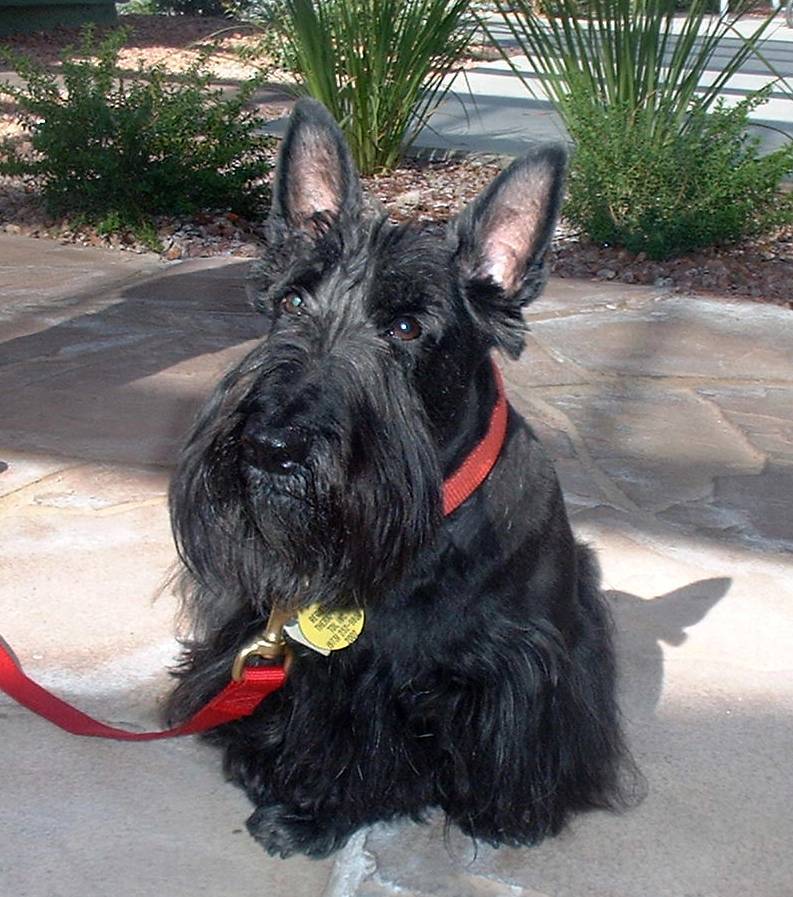
Even though I live in Henderson, Nevada, it’s almost impossible to tell where Las Vegas stops and Henderson begins. In my book about my Scottish terrier therapy dog McDuff, I describe how Scotties are “a breed apart.” The same thing applies to Las Vegas. There is no city like it in the world.

Where else would a friend invite you to a “party,” and you end up attending her surprise wedding? Even her mother didn’t have a clue. No bridesmaids, best man, or other nuptial trimmings. Gourmet cupcakes for everyone replaced the traditional wedding cake. Everything was so exciting, so unforgettable, and so Vegas.

Where else could you attend a variety show at a senior center and see participants ages 65 to 85? Okay, that might not be so unusual. But to see a performer in a nun’s habit announce after taking a long, slow look at the audience, “I’m not a nun, and I’m going to get out of this habit.” She began to strip as “The Stripper” blasted throughout the room. She didn’t have a pole, but made real good use of that chair on the stage. Only in Vegas!

“What happens in Vegas, stays in Vegas” is not true. No matter where life takes me in the future, the memories of beautiful friendships and exciting times I’ve experienced in Las Vegas goes with me.

Monday, December 19, 2011

McDuff's Secret


It’s believed that the bond between a therapy dog and its owner is stronger than ordinary. Perhaps that’s because they partner and share in bringing happiness and joy to others. My Scottish terrier therapy dog lived and breathed to bring comfort and smiles to the elderly, sick, and disabled. I witnessed the life and the future of a fifth grader with crippling reading difficulties change because of reading to McDuff in the Reading with Rover Program.

My life was changed most of all because of Spirit Dog McDuff. I wrote a book, Life with McDuff: Lessons Learned from a Therapy Dog, about my nine-year journey with him and how my life and the lives of others were impacted, even after his death. He taught me many valuable, life-changing lessons. The most important, and the one that has influenced my life the most, was his example of serving others without expecting anything in return. I had to literally drag McDuff across the parking lot to the car after therapy dog visits.

He taught me the secret contained in being of service to others. The secret I learned from him is that you get something beautiful in return when you volunteer to help others. You discover that you help yourself, too, emotionally, physically and mentally. You are not giving; you are getting. And, you get back far more than you give.

I speak to inform and educate seniors, retirees, and baby boomers searching for something worthwhile to do in their spare time about animal assisted therapy and reading programs like Therapy Dogs International, Therapy Dogs Inc., and Reading with Rover. It’s not hard or expensive to brighten up a nursing home, assisted living facility, or hospital by a visit with your dog. It takes little effort to sit quietly nearby while a young student reads to your dog. Believe me, it can change lives — theirs and yours.

Friday, November 25, 2011

Dumb Animals

I bet you’ve heard the term “dumb animals” before. There’s a perception that animals are dumb and that we humans are superior in every way. Well, I have news for you. Animals and birds are not dumb. Oh, I know some of you may disagree. I know I did at one time. That was before I learned about Alex and Chaser and before my first-hand experience with McDuff, a Scottish terrier therapy dog as smart as he was stubborn.

The December 2011 issue of National Geographic Magazine contains an article entitled, “Minds of their Own. Animals are smarter than you think.” In it we are introduced to Alex, an African grey parrot, and Dr. Irene Pepperberg, a psychologist from Brandeis and Harvard Universities. Dr. Pepperberg bought Alex from a pet store when he was a year old. She studied and work with Alex all of his life until his death in 2007 at the age of thirty-one.

Alex learned one hundred fifty words and could categorize them. He counted up to six and had a basic understanding of the abstract concept of zero. Alex knew colors, sizes, and shapes. When shown a blue paper triangle, he told Dr. Pepperberg the color, shape, and after touching it, what it was made of. He understood the difference between big and small, same and different, and over and under.

Alex picked up one liners from the lab workers like “calm down,” and “good morning.” He expressed frustration and boredom. When Dr. Pepperberg put Alex into his cage for the night in September 2007, he looked at her and said, “You be good. I love you.” Those were the last words she would ever hear from him. She found Alex dead in his cage the next morning.

In her research paper, “The Alex Studies,” Dr. Pepperberg provides ample proof that parrots are smarter than we’re led to believe. Dumb bird? Not Alex. He wasn’t parroting, he was thinking.

And then there’s Chaser, a black and white border collie with a vocabulary of over 1,000 words. John Pilley and Alliston Reid are the Wofford College psychologists who worked with Chaser for the last three years. John owns and trains Chaser and Alliston comes up with the experiments. Chaser knows 1,022 proper noun names for various objects. She understands that objects have names and knows that they may have more than one name. She can combine names and commands.

Pilley and Reid published their research in the Journal of Behavioral Processes. Through their work with Chaser we know that the learning capacity of a dog is greater than we originally believed. Pilley, who is retired, says that Chaser is so eager to learn that he has to go to bed at 8:00 p.m. just to get away from her.

Chaser is a celebrity with numerous TV appearances, YouTube video, and newspaper articles. No way Chaser can be called a dumb animal. And from my personal experience with a Scottie with off-the-chart intelligence and you won’t believe stubbornness, I know animals can outsmart us.

Dumb Animals? Here’s Kurt Vonnegut, Jr’s take on the subject: “We are impossibly conceited animals, and actually dumb as heck. Ask any teacher. You don’t even have to ask a teacher. Ask anybody. Dogs and cats are smarter than we are.”

What’s your take?

Wednesday, November 16, 2011

You Have a Story to Tell

When I began to write Life with McDuff: Lessons Learned from a Therapy Dog on January 1, 2007, I knew the entertaining stories about my life with a mystical, stubborn beyond belief, and hilarious Scottish terrier would appeal to others. Before deciding to pick up a pen, or sit down at a computer and let the creative juices flow, you should know something. To become the author of a successful book about your life, you must have a compelling story to tell; one that will capture and hold the interest of readers from beginning to end. No matter how well written, a book about the life and times of the Bulgarian snail probably won’t capture the attention of large audience.

Each one of your lives is unique and contains stories that only you can tell. Perhaps about your childhood, good or bad, a heartbreaking romance, dysfunction family, or even about a special relationship with an extraordinary pet. Whether you know it or not, you have a story to tell.

Life with McDuff is about my Scottish terrier therapy dog, but my life is in it, too. I wrote about a domestic violence incident and a life-saving brilliant white light and the bitter divorce that followed. One of the valuable life lessons that McDuff taught me came during that turbulent time. He taught me how to forgive and get on with life.

I wrote about my mother’s home invasion, lengthy hospitalization in the Intensive Care Unit, and the heartache of disconnecting life support. Asking one person to decide when or whether another person lives or dies is a lot to ask. A precedent-setting jury trial with cameras in the courtroom, AP and local television news coverage, and reporters waiting outside the courtroom with bright lights and cameras followed.

After the loss of my job, I told about the cross-country trip from Columbus, Ohio, to Henderson, Nevada, with my son and McDuff. All of those events happened within a year’s time period.

McDuff was with me every step of the way during those hard times providing his special brand of therapy. When life literally beat me down to the ground, he was there to press his furry body against mine and lick the tears from my face.

McDuff’s outstanding therapy dog work in Las Vegas and Henderson landed us on television and the front page of newspapers. Nine years of my life on a journey with an extraordinary dog provided my compelling story. Look at your life. Do you have a story to tell?

Wednesday, November 9, 2011

What the Heck Is a Therapy Dog?

What the heck is a therapy dog? I asked that question the first time I heard the term. Later when I became a certified therapy dog volunteer and wrote the book Life with McDuff: Lessons Learned from a Therapy Dog, about the nine-year journey with my Scottish terrier, I answered the question many times.

Wikipedia’s definition of a therapy dog is “a dog trained to provide affection and comfort to people in hospitals, retirement homes, nursing homes, schools, people with learning difficulties, and stressful situations, such as disaster areas.” Therapy dogs were used after 9/11 and Hurricane Katrina.

Therapy dogs come in all sizes, breeds and mixture of breeds. The most important characteristics of a therapy dog are good temperament and the ability to get along well with adults, children, and other animals.

The American Kennel Club’s Canine Good Citizen Test for therapy dogs can determine if a dog can handle sudden loud or strange noises, move around on unfamiliar surfaces, are not frightened around people with canes, in wheelchairs, or have unstable ways of walking or moving, and can get along with children, the elderly, and other animals.

Therapy dogs and service dogs are often confused. Wikipedia’s definition of a service dog is “a type of assistance dog specifically trained to help people who have disabilities including visual or hearing impairment, and also to help people with mental disabilities including Post Traumatic Stress Disorder (PTSD) and severe depression.” People are most familiar with guide or seeing-eye dogs, but service dogs also assist in day-to-day activities like pulling wheelchairs, or carrying and picking up things for persons with mobility impairments.

Under the Americans with Disabilities Act of 1990, service dogs must be allowed to go anywhere their handler goes, including restaurants, schools, buses, taxis, airplanes, stores, and any other public place. Medical detection service dogs alert people with epilepsy, diabetes and hypoglycemia, and life-threatening allergies to substances like peanuts. Psychiatric service dogs assist people with panic disorders, PTSD, anxiety attacks, and severe depression.

Good temperament, health, physical structure, as well as intelligence and trainability are a must. Any breed or mixture of breeds can be used as a service dog, but Golden and Labrador Retrievers are often seen.

What should you do when you meet a service dog? Do not pet, make noises or call to it while it’s working. However, you may ask the handler for permission to pet a dog that’s not working. Do not feed a service dog. Talk to the handler, not just to the dog.

Wednesday, August 17, 2011

Inventions: Did You Know?

Did you stop at a traffic light today? Garrett Morgan developed the original traffic signal that ultimately was replaced by the red, yellow, and green signal now used. He also developed the gas mask first used by the army in World War I.

Turned on a light? Lewis Howard Latimer invented an improved process for manufacturing light bulb carbon filaments.

Did you know that you have Jan Matzeliger to thank for the shoes you wear? He developed a shoe lasting machine that attached the sole to the shoe in one minute and revolutionized the shoe industry.

Seen a refrigerated truck hauling frozen food lately? Frederick McKinley Jones invented the first automatic refrigeration system for long-haul trucks and mechanical refrigeration system for trucks and railroad cars.

Ever heard the phrase, “the real McCoy?” Elijah McCoy invented lubrication for railroad engines that was prized above all others. Hence the question, “Is it the real McCoy?”

Did you put Cascade in your dishwasher? If so, you can credit Dennis Weatherby.

Did you know that the Super Soaker used in the water battle by your kids or grandkids was invented by Lonnie Johnson?

If any of you can remember back before computers, did you apply and blow dry an application of liquid paper correction? Betty Graham came up with it.

Did you know that all of the above inventors of PATENTED inventions are just a few that have one thing in common? THEY WERE ALL AFRICAN-AMERICANS!